
What Is Social Media for Restaurants?
What is social media for a London restaurant or café? A plain guide to using social platforms to show your place, help guests choose and keep in touch.
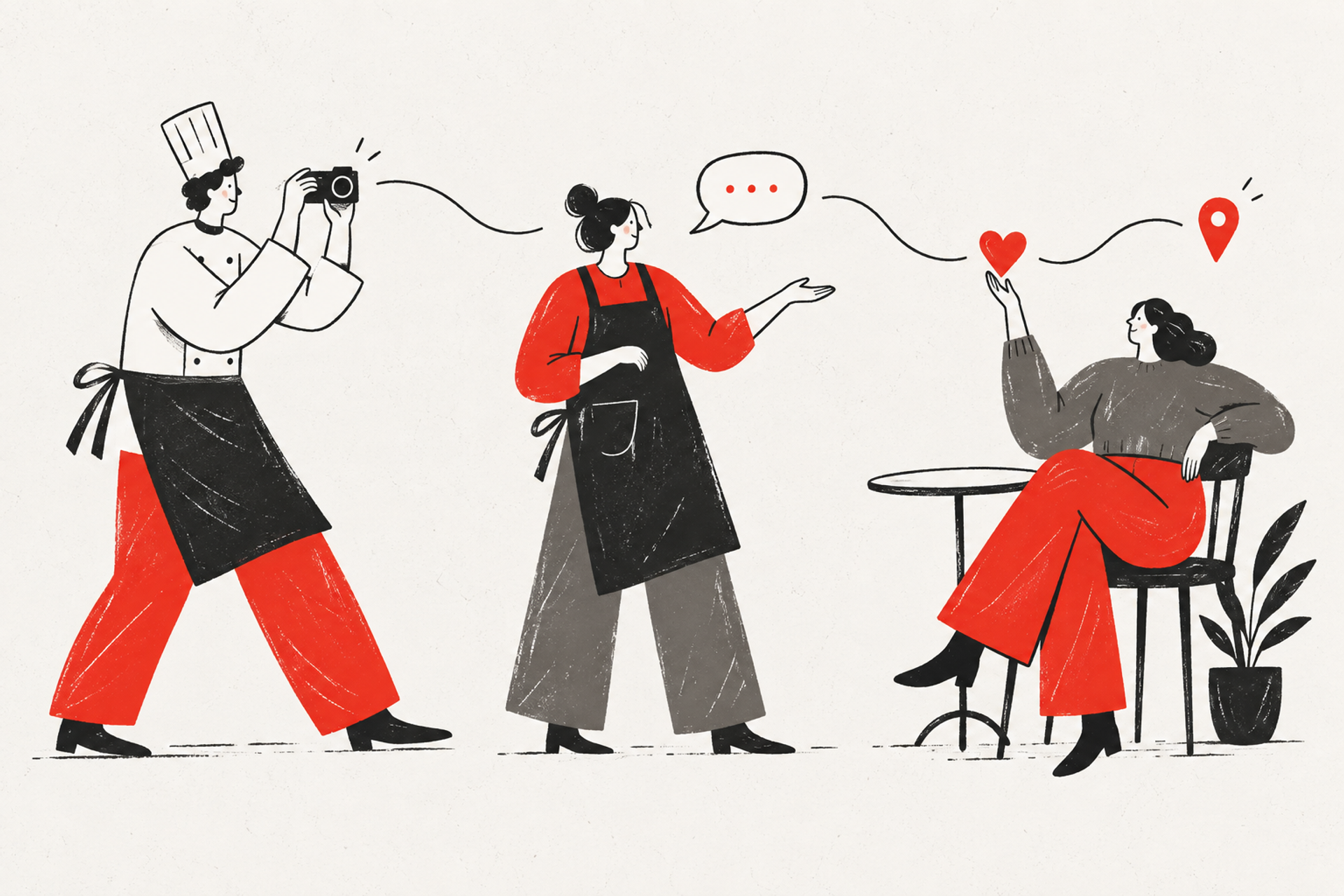
What is social media for a London restaurant or café? It is the online space where you share updates, photos, video and conversations with guests before and after they visit. Used well, it helps people recognise your place, find current information and decide whether to book, walk in or come back.
Social media is not a separate version of the restaurant. It is a window into the real one. For an independent place, that makes it useful: you can show the menu, the mood and the people behind the service without needing a large advertising campaign.
This guide explains what social media means in practical restaurant terms, where it fits alongside Google and your website, and how to use it without making it another full-time job.
What Is Social Media for a Restaurant?
Social media is a group of online platforms where people publish and respond to content. Content can be a photo, a short video, a story, a message, a comment or a location tag. For a restaurant, social media is where that content helps guests understand the place before they arrive.
The point is not simply to collect followers. A useful restaurant profile answers small but important questions: What does the room feel like? Is this somewhere for a quick lunch or a long evening? What is new this week? Can I book? A guest may find the answer from one post, then visit your website or booking link to act on it.
Social media also gives guests a way to respond. They can tag a friend, share a visit, send a direct message or ask a question in a comment. That two-way part is what makes it different from a printed advert or a static menu.
How Do Guests Use Social Media to Choose a London Restaurant?
Guests use social media to reduce the uncertainty of choosing somewhere to eat. They may already know the neighbourhood but not the restaurant, or they may have heard the name and want to see whether it suits the occasion.
In a city with many nearby options, a current profile can make your restaurant easier to place. A post from the dining room, a short video before service or a clear update about a special evening gives context that a name and address cannot provide on their own. The same is true for cafés: people often want to see whether a place is suited to a laptop, a catch-up or a quick coffee before work.
Keep the practical details close at hand. Your profile should point to the right website, reservation link or order page. Make sure the location is correct and that a guest can tell when an update was published. A beautiful post about a past event is less helpful if it looks like something happening today.
What Should a Restaurant Use Social Media For?
A restaurant should use social media to show what is real, answer likely questions and give guests a reason to act now. It works best when each post has one clear job instead of trying to say everything at once.
These are useful jobs for a restaurant post:
- Show the food, drinks, room or restaurant team as guests will genuinely experience them.
- Explain a current change, such as a new menu, a later opening, a private event or a seasonal service.
- Make booking, ordering or finding the restaurant easier with an accurate link and location.
- Help guests get to know the people and routines that give the restaurant its character.
- Share a timely reminder when there is a genuine reason to visit, rather than filling the feed for its own sake.
The visual standard matters because it shapes expectation. A good set of photographs and short clips can be reused across posts, Google and your website. Our restaurant photography and video portfolio shows the kind of consistent visual material that gives a restaurant more to work with than a single announcement.

Which Social Media Channels Matter to London Cafés?
The right social media channel is the one your guests use and your restaurant team can keep current. It is better to look after one profile well than create several that go quiet.
Instagram is commonly useful for restaurants and cafés because it gives you a visual profile, short videos, stories and direct messages in one place. Short vertical video can be a practical way to show the pace of service or a new dish, but only when it is clear and honest. Meta’s official Reels guidance covers the format considerations to check before you promote a video.
Facebook may still be useful if an established local community uses it to look for events or updates. TikTok can suit a restaurant with someone who enjoys making short video regularly. Do not choose either simply because it is fashionable; choose it when there is a clear audience and someone on the restaurant team can maintain it.
Whatever you pick, make ownership clear. Decide who can post, who replies to messages, and how you handle a question that needs an accurate answer from the kitchen or front-of-house team.
What Is the Difference Between Social Media, Google and Your Website?
Social media starts attention and conversation; Google and your website help a guest check details and take the next step. They work together, but each one has a different job.
| Place | Best use for a restaurant | Keep it current with |
|---|---|---|
| Social media | Showing the experience and timely updates | Posts, stories, replies and links |
| Google Business Profile | Helping people find and check the basics | Opening hours, address, menu, photos and reviews |
| Restaurant website | Giving guests one reliable home for decisions | Menu, bookings, ordering, contact and accessibility details |
Google’s restaurant guidance explains that a Business Profile can display menus, photos, reservations, ordering options and essential information in Search and Maps. Use the Google Business Profile restaurant checklist when reviewing what a first-time guest can see.
Your social profile should never be the only place that holds vital information. A story disappears, platforms change and an old caption can be shared long after it is relevant. Put your lasting details on the website and link to them from social media.
How Often Should a Restaurant Post on Social Media?
A restaurant should post at a pace it can sustain without lowering the quality or accuracy of what it shares. One useful post each week, plus timely stories or updates, is a good starting rhythm for many small restaurant teams.
Plan around work that is already happening. A new menu, a change of season, an event, a team story or a regular service moment can all give you a natural reason to create content. A content plan is a short list of those moments, the material you need and when it should be published. It removes the pressure to invent an idea at the end of a busy shift.
Take stock each month. Notice which posts brought useful questions, booking-link visits or guest comments, and which took too much effort for too little value. Keep the parts that help the restaurant and drop the parts that only add work.
For a fuller look at this choice, read our guide to social media marketing for local restaurants. It explains why a consistent presence can be worth the time and budget for a smaller independent business.
How TeoPix Uses Social Media Content for Restaurants
TeoPix Creative plans social media content around the restaurant’s real calendar, menu and service rather than treating every post as a separate job. Our Creative Team combines regular shoots with editing and posting, giving restaurants material that is ready for social channels while keeping the work connected to the place itself.
For an opening, a refit, a new menu or a refreshed feed, a Shoot Day can create the food, drinks, venue and team material needed for a clear starting point. The restaurant team can then use that library of images and video when a real update needs to go out. You can see both ways of working on our restaurant creative services.
This approach works because the content begins with what guests need to see, not with a demand to post constantly. A considered shoot and a simple plan give a restaurant more room to communicate well during busy service.
Start With One Useful Conversation
Social media is simply a way for a restaurant to show up, share something useful and make it easier for guests to respond. Start with one platform, accurate details and a few clear content ideas drawn from the restaurant you already run.
The best next post is often the simplest: something true that helps a local guest understand your place or make a plan to visit. If you would like a hand building the photographs, video and rhythm behind that work, let’s talk.
Frequently asked questions
What is social media in simple words?
Social media is a set of online platforms where people and businesses share photos, videos, messages and updates, then respond to one another. For a restaurant, it is a practical way to show what the place is like, answer questions and keep local guests informed between visits.
Does a small café need social media?
A small café does not need to be on every platform, but it benefits from one current place where guests can check the atmosphere, opening details and what is happening this week. A simple, reliable profile can be more useful than an ambitious plan that is difficult to keep up.
Is Instagram social media for restaurants?
Yes, Instagram is one type of social media and is often useful for restaurants because it supports photos, short video, stories and direct messages. It is one part of a wider guest journey, alongside Google Search, Maps, a restaurant website and any booking or ordering page.
What should a restaurant put on social media?
A restaurant should share useful, true-to-life updates: the food and drink, the room, the restaurant team, current opening details and genuine reasons to visit. Keep booking links and location details clear. Avoid posting only offers, or sharing material that makes the restaurant look different from a guest’s real visit.